How long does a split system air conditioner last? In Australia, a well-maintained split system typically lasts between 10 and 20 years, with most units hitting the 12–15 year mark before needing replacement. The actual lifespan depends heavily on usage patterns, maintenance habits, installation quality, and the Australian climate conditions your unit faces.
If you’ve just invested in a new split system — or you’re wondering whether your ageing unit is worth repairing — this guide walks you through everything you need to know to get the most out of your air conditioner.
What Is the Average Lifespan of a Split System Air Conditioner in Australia?
The average split system air conditioner in Australia lasts around 12 to 15 years under normal residential use. Premium brands with quality components can stretch to 20 years, while budget units or poorly installed systems may start causing problems after just 8 to 10 years.
It’s worth understanding that a split system has two main components — the indoor unit (the head unit mounted on your wall) and the outdoor unit (the compressor). The outdoor unit tends to wear out faster because it’s exposed to the elements year-round: UV radiation, rain, coastal salt air, and the wide temperature swings that Australian summers and winters deliver.
For context, Australian summers are increasingly pushing temperatures above 40°C in many regions, which puts significant strain on the compressor. The harder your system works, the faster its components age.
What Factors Affect How Long a Split System Lasts?
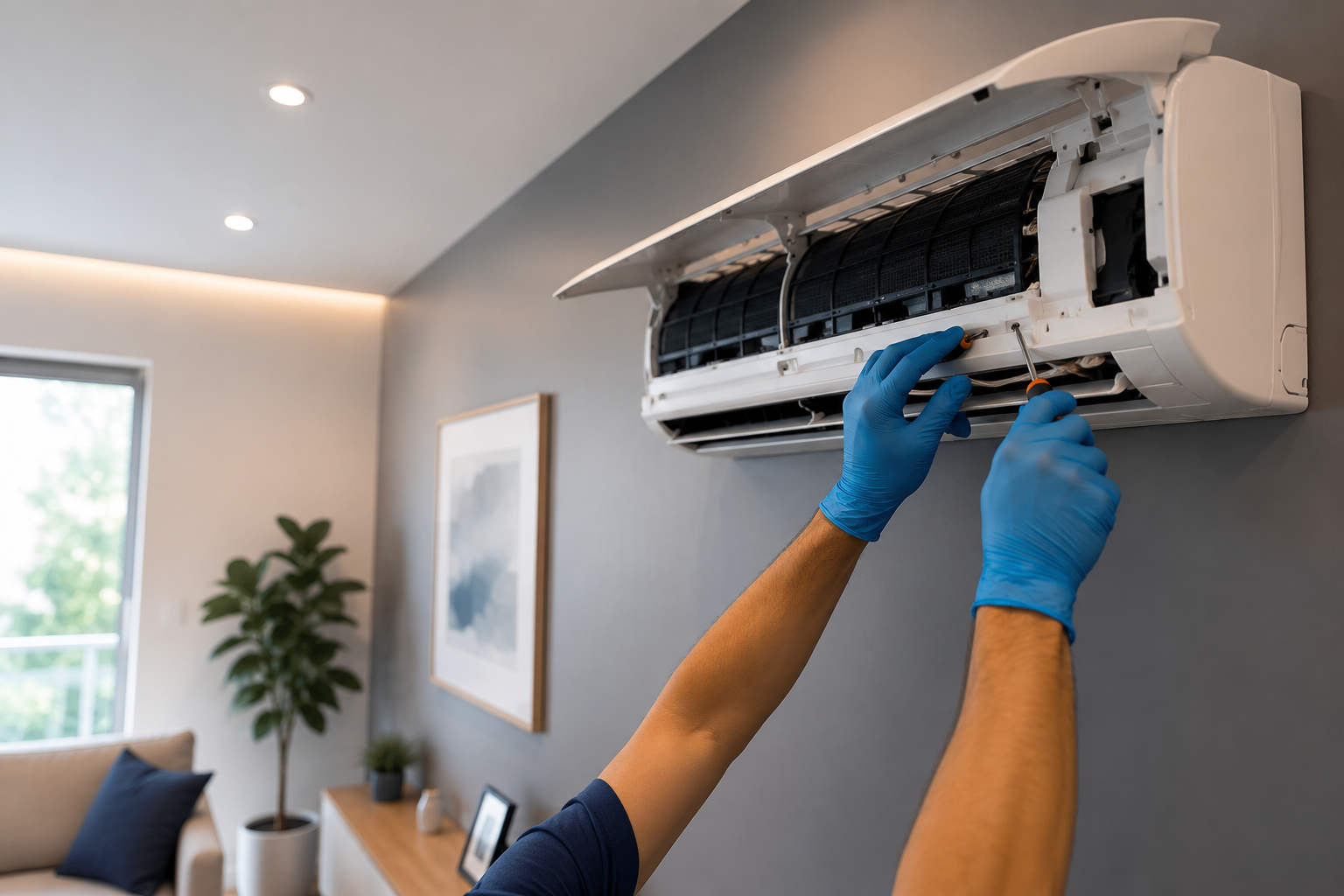
Several variables influence whether your unit reaches the 20-year mark or needs replacing at 10. Understanding these factors helps you make informed decisions about maintenance and replacement timing.
- Installation quality: A poorly installed system — incorrect refrigerant charge, undersized piping, or inadequate drainage — can cut years off the unit’s life. Always use a licensed refrigeration mechanic for installation, as required under Australian regulations.
- Regular servicing: Units that receive annual professional maintenance consistently outlast those that are neglected. Cleaning coils, checking refrigerant levels, and clearing drain lines all prevent premature wear.
- Filter cleaning: Blocked filters force the system to work harder, increasing wear on the compressor and fan motor. Cleaning filters every 4–6 weeks during heavy use periods is a simple DIY task that pays dividends.
- Usage hours: A system running 10+ hours daily during summer will age faster than one used occasionally. Zoned usage and programmable timers help manage this.
- Climate and location: Coastal homes face salt air corrosion on the outdoor unit. Homes in dusty inland areas deal with clogged coils. Both environments demand more frequent maintenance.
- Brand and build quality: Established brands with quality compressors (Daikin, Mitsubishi Electric, Fujitsu, and Panasonic are commonly cited by Australian technicians) tend to outlast cheaper alternatives significantly.
- Correct sizing: An undersized unit that constantly runs at full capacity will wear out faster than a correctly sized one. Oversized units cycle on and off too frequently, stressing components.
If you’re planning a new installation, getting the sizing and setup right from the start is the single biggest thing you can do for long-term performance. The team at split system installation in Brighton can assess your space and recommend the right capacity for your home.
What Are the Signs Your Split System Is Nearing the End of Its Life?
Your air conditioner won’t simply stop working one day without warning. Most units give you clear signals that they’re deteriorating. Recognising these early saves you from an unexpected breakdown in the middle of a 38°C Melbourne summer.
Watch for these warning signs:
- The unit is running but not cooling (or heating) effectively, even after a filter clean
- Unusual noises — grinding, rattling, or squealing from either the indoor or outdoor unit
- Frequent refrigerant top-ups (refrigerant shouldn’t need topping up unless there’s a leak)
- Water leaking from the indoor unit beyond normal condensation
- Noticeably higher energy bills without a change in usage patterns
- The system short-cycles (turns on and off rapidly)
- Mould or persistent musty odours that don’t resolve after cleaning
- The unit is over 12 years old and requires a major repair (compressor, PCB board)
A single issue doesn’t necessarily mean replacement — but if you’re seeing multiple symptoms on an older unit, the repair-versus-replace calculation starts tilting toward replacement.
Repair vs Replace: How Do You Decide?
The general rule of thumb used by most Australian HVAC technicians is the 50% rule: if the cost of a repair exceeds 50% of the cost of a new unit, replacement is almost always the better financial decision. This is especially true for units over 10 years old, where further failures are likely after the first major repair.
| Scenario | Repair Cost (Approx.) | Recommendation |
|---|---|---|
| Fan motor replacement (indoor) | $200–$450 | Repair if unit is under 10 years old |
| PCB (control board) replacement | $300–$600 | Repair if unit is under 8 years old |
| Refrigerant recharge (with leak repair) | $250–$700 | Repair if unit is under 10 years old |
| Compressor replacement | $800–$1,800+ | Replace if unit is over 10 years old |
| New split system (supply & install) | $1,200–$3,500+ | Best long-term value for ageing units |
Also factor in energy efficiency. A 15-year-old split system may have an energy star rating that looks poor compared to today’s inverter technology. Modern inverter split systems can be 30–50% more energy efficient than older fixed-speed units, which means a new system often pays for itself in reduced electricity bills within a few years.
How Long Does a Split System Last With Proper Maintenance?
With consistent care, a quality split system can comfortably reach 15–20 years of reliable operation. Maintenance isn’t complicated — it just needs to be consistent. Here’s a practical maintenance schedule Australian homeowners should follow:
- Every 4–6 weeks (during use): Clean or rinse the indoor unit’s air filters. This is a straightforward DIY task — slide out the filters, rinse under cool water, let them dry, and reinstall.
- Every 6 months: Wipe down the indoor unit’s vanes and casing. Check the outdoor unit for debris buildup (leaves, grass clippings) around the condenser coil.
- Annually: Book a professional service. A licensed technician will clean the evaporator and condenser coils, check refrigerant pressure, inspect electrical connections, clear the condensate drain line, and test the system’s performance. Expect to pay $120–$250 for a standard residential service.
- Before summer and winter: Run the system for a short test period before peak season to catch any issues early, when technicians are less busy and parts are more readily available.
For homes in coastal suburbs or areas with high dust exposure, increase the frequency of professional servicing to twice yearly. The salt air and particulate matter accelerate coil corrosion and filter clogging significantly.
If you’re in Melbourne’s inner north and want reliable ongoing service, split system installation and servicing in Brunswick is available through the Pergz Air team.
Can You Extend the Life of Your Split System Yourself?
Yes — there’s a meaningful amount homeowners can do without a technician. Filter cleaning is the most impactful DIY maintenance task, and it genuinely extends unit life by reducing strain on the fan and compressor. Keeping the area around the outdoor unit clear of vegetation and debris is another simple but effective step.
What you should not attempt yourself includes anything involving refrigerant (handling refrigerants requires an ARCTick licence under Australian law), electrical wiring, or disassembling the outdoor unit. These tasks carry safety risks and legal requirements that make professional involvement essential.
You can also extend lifespan by using the system sensibly: set temperatures to 24–26°C for cooling rather than blasting at 18°C, use sleep modes and timers, and avoid running the system with doors and windows open unnecessarily.
When to Call a Professional
Call a licensed air conditioning technician when you notice any of the warning signs listed earlier — particularly refrigerant leaks, electrical faults, or compressor issues. These aren’t problems that improve with time, and delaying often turns a manageable repair into a full replacement.
You should also call a professional before purchasing a replacement unit. An experienced technician can assess whether your existing system is worth repairing, advise on the correct capacity for your space, and ensure the new installation meets Australian standards — which protects both your warranty and your safety.
Pergz Air services homes across Melbourne’s suburbs, from split system installation in Altona through to Balwyn and Carlton. Whether you need a service, a repair assessment, or a full new installation, the team can give you an honest recommendation based on your specific unit and situation.
Conclusion
How long does a split system air conditioner last? In Australia, you can realistically expect 12–15 years from a quality unit that’s properly installed and regularly maintained — and potentially 20 years if you’re diligent about servicing. The key variables are installation quality, consistent filter cleaning, annual professional servicing, and not pushing an ageing unit past the point where repair costs outweigh replacement value.
If your system is showing signs of age or you’re ready to upgrade to a more energy-efficient model, getting expert advice early saves money and avoids the stress of a breakdown at the worst possible time. Reach out to Pergz Air for an honest assessment and a quote that suits your home and budget.
Frequently Asked Questions
How long does a split system air conditioner last in Australia?
In Australia, a split system air conditioner typically lasts 12 to 15 years with regular maintenance, and up to 20 years for quality brands that are well serviced. Factors like climate, usage frequency, installation quality, and how consistently you clean the filters all influence how long your unit will reliably operate.
How do I know when my split system needs replacing?
Key signs include reduced cooling or heating performance, unusual noises, frequent refrigerant top-ups, water leaking from the indoor unit, rising energy bills, and short-cycling. If your unit is over 12 years old and facing a costly repair like a compressor replacement, replacement is usually the more economical long-term choice.
How often should a split system be serviced in Australia?
Most Australian HVAC technicians recommend a professional service once a year for standard residential use, and twice yearly for homes in coastal or high-dust environments. Homeowners should also clean the indoor unit’s filters every four to six weeks during periods of heavy use to maintain airflow and efficiency.
Is it worth repairing an old split system air conditioner in Melbourne?
In Melbourne, whether to repair or replace depends on the unit’s age and the repair cost. A common guideline is to replace if repair costs exceed 50% of a new unit’s price. For units over 10–12 years old requiring major work like a compressor replacement, investing in a new, energy-efficient system almost always makes better financial sense.
What split system brands last the longest in Australia?
Daikin, Mitsubishi Electric, Fujitsu, and Panasonic are consistently rated by Australian technicians as the most reliable and long-lasting split system brands. These manufacturers use quality compressors and components, and their parts availability makes repairs more cost-effective throughout the unit’s lifespan compared to budget alternatives.
Can I do split system maintenance myself in Australia?
Yes — cleaning air filters every four to six weeks is a straightforward DIY task that significantly extends your unit’s life. Keeping the outdoor unit clear of debris is also something you can manage yourself. However, anything involving refrigerant, electrical components, or internal coil cleaning must be handled by a licensed technician under Australian law. For more about what we do, visit our homepage.